Retired without being idle, silver hair shining in the fields, smiling and holding "golden bumps" in the abandoned land
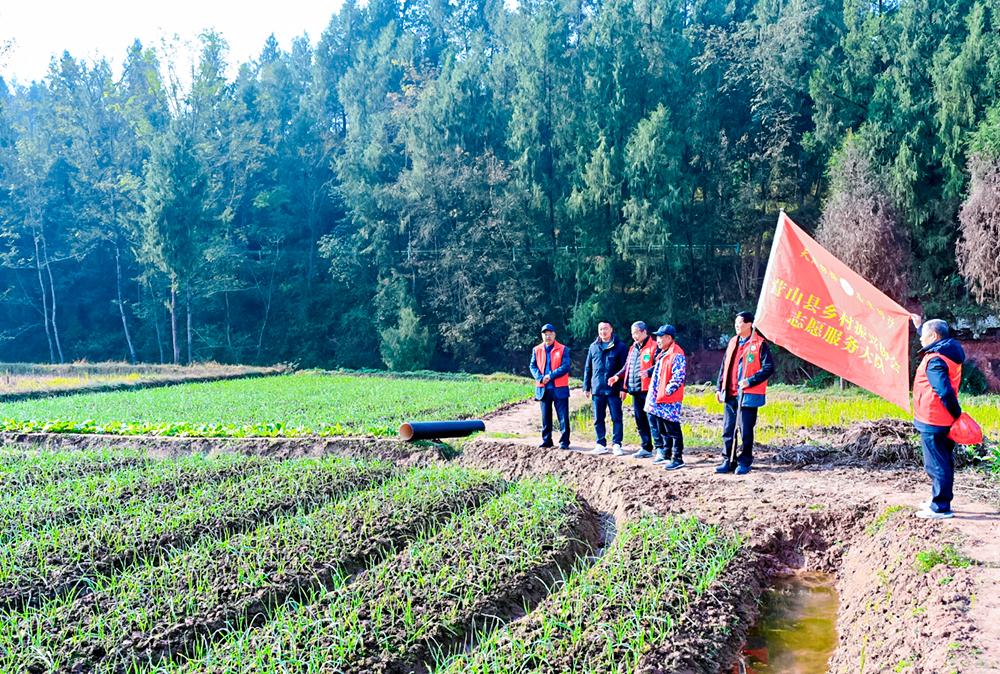
Be careful when digging, don't hurt the taro seeds! "On the morning of December 8th, in Xiangji Village, Lujing Town, Yingshan County, Nanchong City, Sichuan Province, Zhang Jihui, in his 60s, wearing a straw hat, holding a hoe and fingers, guided the workers to harvest taro. The sound of hoes digging and bamboo baskets colliding in the fields interweaves into a lively scene of harvest. After a year of cultivation, the 15 acres of Guangxi sweet potatoes he planted have officially entered the harvest season. Full and round sweet potatoes are dug out from the soil, becoming "golden lumps" in the hands of the villagers. This 15 acre sweet potato planting base in Guangxi is the "new answer sheet for rural revitalization" submitted by this retired teacher. It not only explores the scientific planting mode of garlic intercropping and rice rotation, but also enables seven villagers to achieve employment at their doorstep, activating the "green economy" of rural areas with the "silver hair power".
Retired without being idle, choose taro to increase income
Zhang Jihui used to teach children knowledge in school, but now he wants to teach villagers how to 'grow a good life' in the fields. Before retiring, he was a senior teacher at Xingzhi Primary School in Yingshan County. After retiring in 2023, seeing the situation where some land in the village was idle and villagers wanted to increase their income but lacked skills, he came up with the idea of 'rooting in the fields to help the people become prosperous'.
After more than three months of market research and variety investigation, Zhang Jihui finally chose Guangxi taro. This variety has strong disease resistance and a powdery texture, and is very popular in the market. It is also suitable for the soil and climate here. To dispel the concerns of the villagers, he took the lead in transferring 15 acres of land out of his own pocket, promising that "I will teach the technology and take the risk first", and quickly gained the support of the villagers.
Look at this taro, it has white skin and tender flesh, and can weigh two or three pounds each! "Villager Luo Liangzhen held the freshly dug taro in both hands, with a smile on her face. She bent down and gently dug open the soil at the roots with a hoe. Under the purple red taro stalks, three or four conjoined taro were clustered together. After shaking off the soil, the snow-white taro flesh shone with a warm luster. This year's rainfall is even, and we used sheep manure as fertilizer. The taro is growing well
Scientific planting "clever combination", green planting and breeding cycle
Entering the taro base and observing carefully, one can discover the "planting mystery": garlic and fava beans are neatly planted between rows of taro. This is not a random planting! "Zhang Jihui explained with a smile. The intercropping is Shandong Space-2 garlic and local fava beans, which can fully utilize light and soil fertility, and reduce pests and diseases through crop intercropping; After the taro is harvested, the fields will rotate rice to form a green planting cycle of "taro garlic/bean rice".
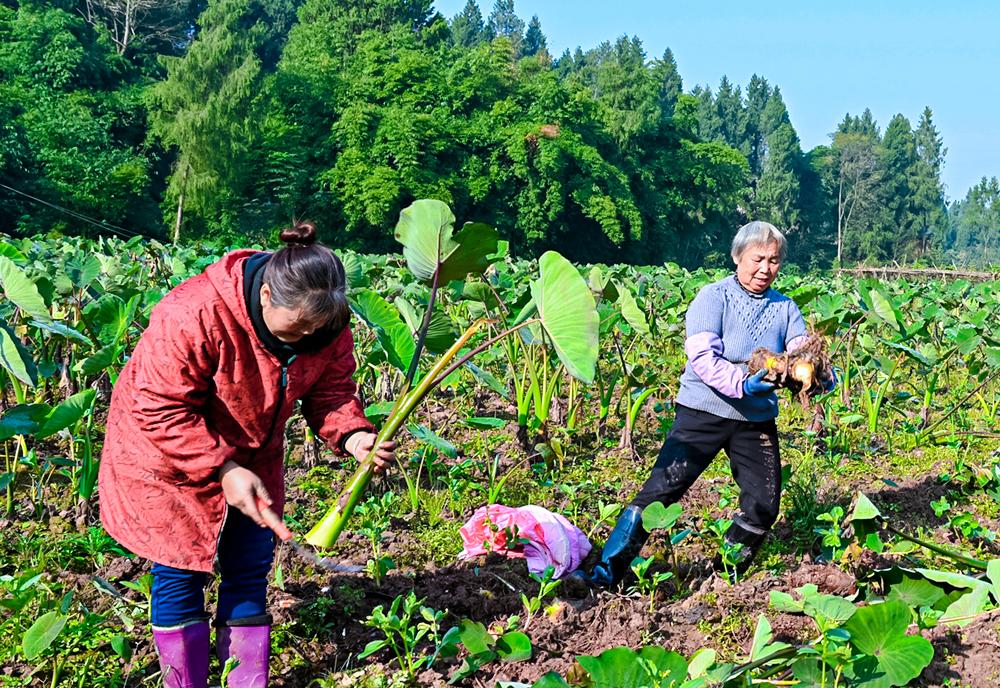
When harvesting, you should follow the direction of the taro leaves to find the root system, and don't dig up the taro seeds. If the skin is broken, it's not easy to store. "Zhang Jihui shuttled between the fields, stopping from time to time to demonstrate harvesting techniques. He picked up a freshly dug out taro and explained to the villagers, "The selling point of the Guangxi taro we planted is that it is sticky and gluten free, and the appearance is well protected during harvesting. The purchase price can be sold for 3.5 yuan per kilogram, which is 50 cents more expensive than ordinary taro
In order to ensure the quality of taro, Zhang Jihui also set up a "screening post" on site: taro with a size less than 1 pound are individually packaged in baskets for processing taro paste; If the size meets the standard and the appearance is intact, it will be put into a shopping basket and directly supplied to supermarkets. Yesterday, I harvested 1 acre of land and sold it for nearly 10000 yuan, "Zhang Jihui said with satisfaction as he flipped through the harvest record book." I promised everyone to 'have work to do and earn money,' and now I have finally fulfilled my promise
What impressed the villagers even more was the clever idea of "turning waste into treasure": the taro stems and leaves produced after harvesting were often discarded in the past, but now they have become "pig feed" for nearby farmers; The fertilization of the base also adheres to the "green principle", specifically purchasing sheep manure from Inner Mongolia and using it with decomposed rabbit manure from local rabbit farms. "No need for chemical fertilizers or pesticides, the taro grown is a 'safe vegetable', and the purchase price can be 20% higher than ordinary taro," said villager Luo Liangzhen.
Seamless integration of production and sales, silver haired economy warming rural areas
Mr. Zhang's taro is of high quality. We have already ordered a quantity of 5 acres, and today we will take away 2000 pounds first. "Mr. Liu, the purchaser, told us with the test report that the pesticide residue testing of this batch of taro is fully qualified, and the sugar and starch content meet the high-quality standards." Consumers in the supermarket recognize this' green taro planted by retired teachers', and the 500 pounds that arrived yesterday were sold out in half a day
Teacher Zhang's base is our 'income increasing station'! "Li Jianguo, a villager who is cultivating taro soil, calculated a sum of money: from land preparation and sowing to field management and harvesting, the base requires workers all year round. He and his wife work here, earning 160 yuan a day and more than 4000 yuan a month." You don't have to go out to work, and you can take care of the elderly and children at home. It's down-to-earth
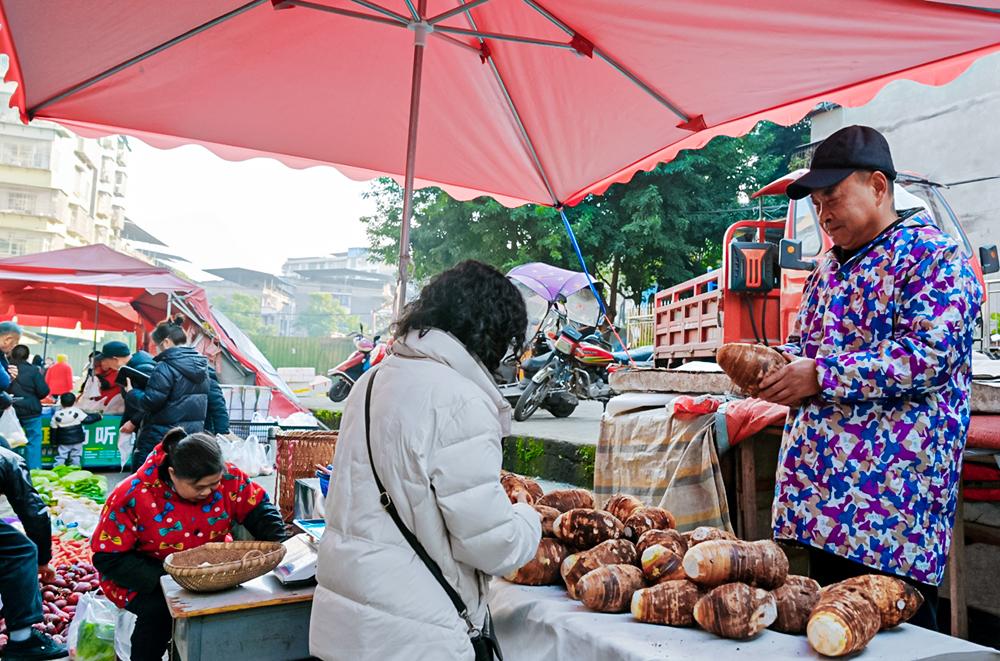
It is understood that currently the base is driving 7 villagers to work, most of whom are left behind women and low-income farmers. Zhang Jihui also regularly organizes planting training, teaching villagers hands-on techniques such as seed selection, fertilization, and pest control. "We not only want everyone to earn money, but also teach them techniques so that they can also engage in planting in the future," he said
As the sun sets, the first harvested taro slowly leaves the base, while the villagers in the fields are still busy. Working with Teacher Zhang not only earns money, but also teaches me how to grow taro. Next year, I plan to plant two acres in my own land! "Luo Liangzhen looked at the distant truck with anticipation in her eyes. This once idle land has not only produced plump taro, but also planted the hope of increasing income for the villagers.
Now, this 15 acre taro base has entered the harvest season, with an expected yield of 2000 kilograms per acre this year and a comprehensive income exceeding 200000 yuan. Zhang Jihui's' Silver Hair Helps Farmers' initiative not only revitalizes idle land, but also injects' heartwarming momentum 'into rural revitalization. Zhu Xiaojun, the secretary of the Xiangji Village Party Branch, stated that he will summarize and promote his green planting model, encourage more retired talents to participate in rural construction, and make the "silver haired economy" a "new engine" for rural development. (Deng Jingjing, Zou Gang)
All articles,data and pictures on this website are from the Internet,and all copyrights belong to the source website or source author.if it infringes on your rights,please let us know and delete it.