A piece of tea is rich, Sichuan Yingshan Mingde Spring Tea is harvested at the right time
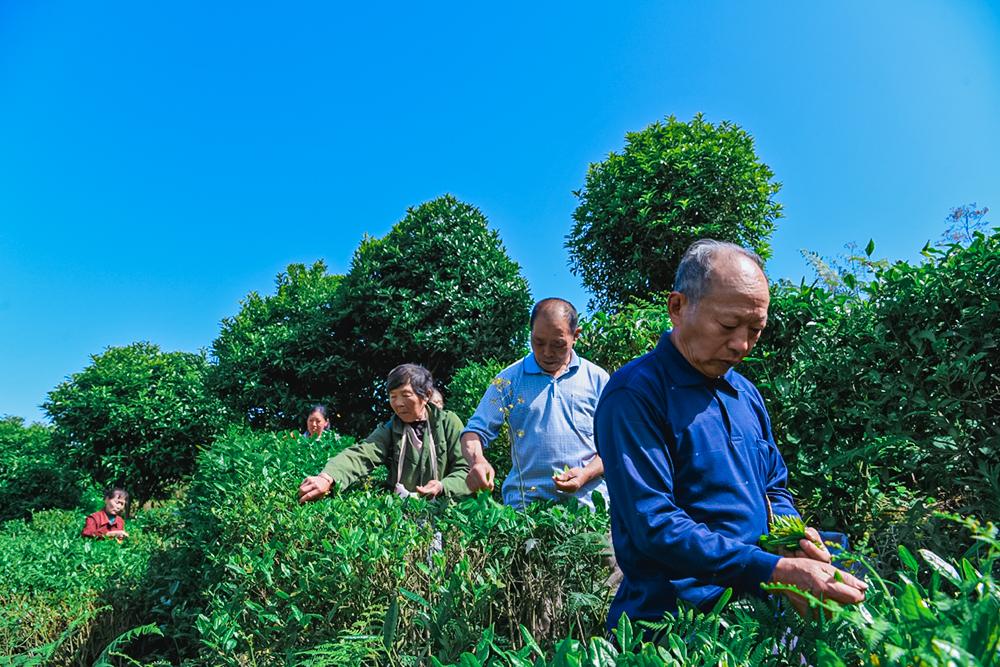
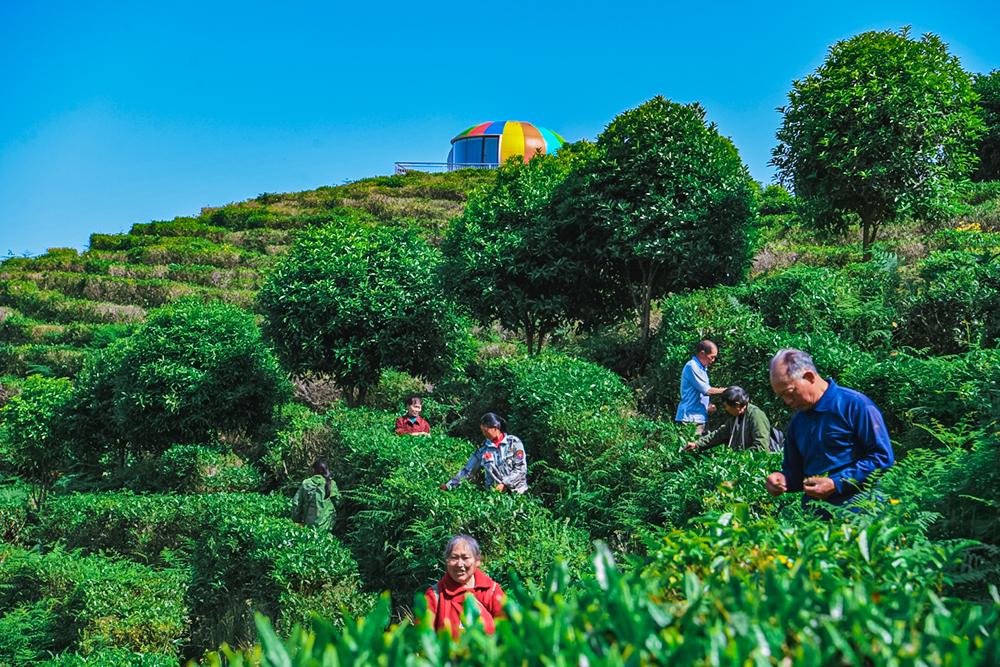
In late spring, the tea gardens in Mingde Township, Yingshan County, Nanchong City, Sichuan Province are lush with greenery, with layers of tea trees spreading along the mountain terrain, and the air filled with a fresh tea aroma. Pu Yiqiong, who lives in Fulou Town, Pingchang County, got on the special car to pick her up at 6am and rushed across the county to pick tea. The wages here are really good, and we also provide transportation and meals, which is much better than staying idle at home, "she said with a smile. In Mingde Township, there are still many tea farmers like her who work across counties every day. During the peak season of tea picking, 60-70 people work simultaneously in the tea gardens.
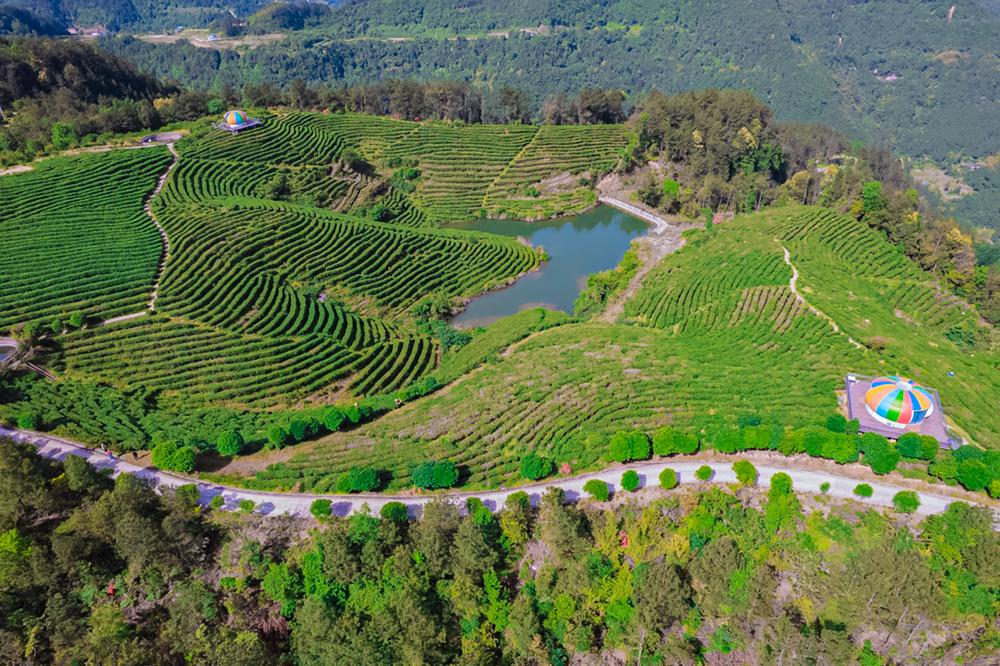
This 500 acre high mountain tea garden was gradually cultivated by retired soldier Deng Peng over a period of more than 10 years. He introduced high-quality tea varieties from the famous mountains of Ya'an and led his fellow villagers to establish the Pengda Agricultural and Animal Husbandry Professional Cooperative in Yingshan County at the foot of Chendazhai Mountain, which is over 800 meters above sea level. The best-selling product is Maojian, which produced over 13000 kilograms of dried tea last year with a production value of over 3 million yuan, "Deng Peng explained.
Mingde Township is surrounded by mountains and fog, and the soil is rich in selenium. The tea grown in Mingde Township has a high aroma and a mellow taste, making it a natural high-quality tea production area. In recent years, the township party committee and government have taken the tea industry as the leading industry for rural revitalization, promoting the development of the tea industry from scattered planting to scale and standardization through the establishment of parks, the cultivation of main bodies, the creation of brands, and the promotion of integration. We fully support Pengda Cooperative to play a leading role and actively coordinate and solve various problems in industrial development. Currently, a complete development system integrating production, processing, and sales has been formed
The booming development of the tea industry has opened up stable channels for the surrounding people to increase their income. The cooperative has established clear salary standards for migrant workers: 35 yuan per kilogram for picking Maojian, 15 yuan per kilogram for Maofeng, 3 yuan per kilogram for green tea, 60 yuan per day for weeding in tea gardens, and 80 yuan per day for pruning. During the peak season of spring tea picking, there are 60-70 workers working in the tea garden every day, and the scale is usually maintained at around 30-40 people, "Deng Peng said.
Out of the single mode of "planting tea and selling tea", the cooperatives also actively promote the integrated development of tea tourism. Based on the ecological landscape of high-altitude tea gardens, a viewing platform, leisure trails, and characteristic homestays have been built, creating a demonstration site for the integration of agriculture and tourism that integrates tea picking experience, handmade tea making, and leisure tea tasting. Recently, the daily income from weekend homestay accommodation has exceeded 3000 yuan, and the catering income is about 4000 yuan. Many tourists come here specifically to experience the tea garden scenery and tea culture. Deng Peng introduced that the integration of agriculture and tourism not only extends the industrial chain, but also enhances the brand awareness of Mingde Tea.
To ensure the quality of tea, the cooperative implements the "six unifications" standardized production mode, uniformly introduces high-quality varieties such as Fuding 8 and Fuding 9, fully adopts organic fertilizer planting and green prevention and control technology, and controls the quality of tea from the source. At the same time, a standardized processing plant will be built, equipped with modern withering, rolling, and drying equipment, inheriting the intangible cultural heritage skills of handmade tea making, and achieving "high-end tea handmade refinement and standardized production of popular tea machinery".
When it comes to future development, Deng Peng said that the cooperative plans to introduce tea picking machines next year, gradually promote mechanized picking, and solve the problems of high labor costs and low picking efficiency. At the same time, we will develop more derivative products, hold tea culture experience activities, promote the deep integration of the tea industry with cultural tourism and health care, and make this high-altitude tea garden a "green bank" that drives more people to increase their income and become prosperous.
The Mingde tea industry is a business card of Yingshan's characteristic agriculture. Currently, it has formed the regional public brand of 'Yingshan Green Tea' and four major brands of 'Mingde Green Tea', 'Mingde Gong Tea', 'Chen Dazhai Ganlu', and 'Deng's Mingde Tea'. 'Yingshan Green Tea' has successfully been listed in the national and provincial agricultural brand directory. 'Wu Jiangxue, the director of the county's agricultural and rural bureau, introduced that the bureau will promote the development and growth of the Mingde tea industry through expert workstations, promotion of green prevention and control technology, and regional public brand building, and further improve the interest linkage mechanism of' cooperatives+farmers', promote the development of the tea industry towards branding, intensification, and integration, and make small tea become a major industry driving the comprehensive revitalization of rural areas. '. (Peng Chuanheng)
All articles,data and pictures on this website are from the Internet,and all copyrights belong to the source website or source author.if it infringes on your rights,please let us know and delete it.